
Connecting the Dots

Top Fixes for a 3D Printer Jam
Got a 3D printer jam? You're not alone! This is the most common issue with FDM/FFF style 3D printing. Here are the most common causes and top fixes for this issue.
Read more

How Do You 3D Print A Tortoise Shell?
Using our team's deep expertise in 3D scanning, materials, and 3D printing, we were able to come up with a lifelong solution for our new friend, George.
Read more

10 Customizable Settings on the Sintratec Kit
Many of our customers ask about the customizable settings on the Sintratec Kit. Usually, they are working on some top secret project, so we don't have all the details, but we know lots of amazing...
Read more

May 8, 2020
Product Development & Remote Work - Can 3D Printing Make it Easier?
It could be a fantastic way to increase efficiency as we find new ways to work and collaborate together.
Read more

How Strong Are SLS Printed Parts?
A question we often get asked is “How strong are SLS printed parts?”. One option is to have your Sintratec Kit prints parts out of a nylon (PA12) powder, which is fused together by a laser. This method raises questions of strength...
Read more

How Much Can You Fit In Your Sintratec Kit?
The Sintratec Kit is a compact but mighty desktop SLS printer that can be packed full of parts for printing. Since each layer takes about the same time, whether it's 1 part or 64 parts, it is more effective...
Read more

Oct 23, 2019
Thinking Outside the Box
Many people look at the Sintratec Kit and believe the build volume is too small for their application. It’s true that the recommended 90 x 90 x 110 mm build volume would be too small to print many kinds of tall parts. However, there are still ways to print large parts...
Read more
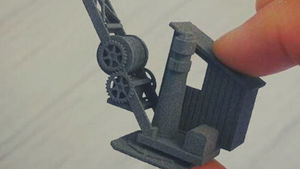
Sintratec Kit Quality - Proof is in the Prints
Given the low price point of the Sintratec Kit, we often get customers who wonder if the Sintratec Kit is really able to deliver quality results. Can the Sintratec Kit simultaneously be...
Read more
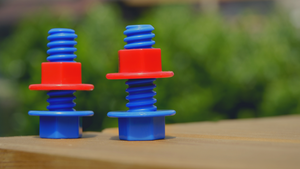
To print or not to print...Threads and 3D Printing
Customers commonly ask us if machine threads can be 3d printed into their parts, and it is a tricky because the answer is "it depends". Are the threads fine or coarse? Let's discuss...
Read more

Jul 11, 2019
FFF: Design for Printing
As with all manufacturing processes, you will come across some limitations in terms of what designs are suitable for 3D printing. That being said, we are capable of printing extremely complex...
Read more

3D Printing Tolerances & Fits
Like any manufacturing process, in 3D printing it is important to understand the tolerances of the process so that you can properly design parts to fit together and function.
Read more

Composites might just change the world
Composites are a new class of 3D printing materials where polymers are mixed with reinforcing fibers. Typically, these materials consist of a robust polymer base (like Nylon, PETG or ABS), which are then...
Read more

