Jul 01, 2026
What I Learned at Haas Demo Day in Tampa
Last week I had the opportunity to exhibit and give a short presentation at the Haas Factory Outlet Demo Day in Tampa. First off, a huge thank you to the Haas Factory Outlet team for putting on a fantastic event. It was great seeing so many people who genuinely enjoy making things, and there is something refreshing about spending a day around machinists. They're practical people. They don't care much about buzzwords or hype. They care whether something saves time, makes money, or solves a real problem.
Going into the event, I expected to spend most of the day talking about 3D printers.
I was wrong.
Most of the conversations had very little to do with printers at all. Instead, they revolved around bottlenecks. One shop was struggling with workholding on an oddly shaped part. Another was spending far too much labor masking components before coating. Someone else wanted to automate a process but couldn't consistently present parts to a robot. The more people I spoke with, the more obvious it became that everyone was fighting the same battle from different angles. They weren't looking for another machine. They were looking for a better process.
One conversation really stuck with me.
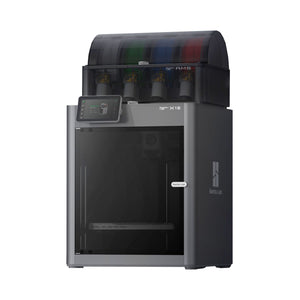
A younger machinist stopped by because he recognized the Bambu Lab printer sitting on our table. He told me his shop had recently bought an X1C after he convinced his boss that they could save money by printing a few simple fixtures. He had taught himself Fusion 360, figured things out through YouTube and trial and error, and before long the printer had paid for itself.
I asked him what he normally did. "I'm actually a machinist," he said.
That answer made me smile because it's exactly how most people get started with additive manufacturing. Nobody wakes up one day and decides to become a 3D printing expert. They're an engineer, a machinist, a technician, or a manufacturing manager who runs into a problem and realizes a printer might be another useful tool.
The interesting part is what happens next.
Eventually everyone reaches the point where they're no longer asking, "Can I print this?" They start asking questions like, "What material should I use?" "How should I orient this?" "Would scanning this part save me time?" "Could this fixture be designed differently?" "Why did this one succeed while the last one failed?"
That's where our team usually gets involved.
I don't think of 3DChimera as a company that sells 3D printers. Yes, we do that, and we're proud of the equipment we represent. But that's not really what customers hire us for.
What they hire us for is experience.
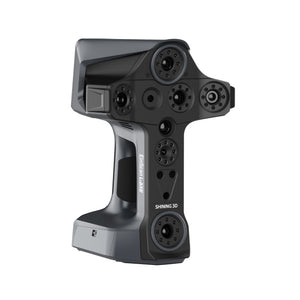
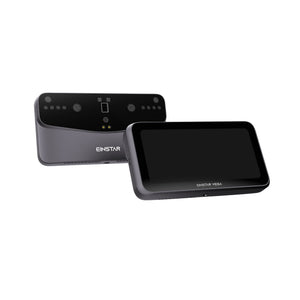
Our team has spent years learning the things that are difficult to pick up from Google or YouTube. Design for Additive Manufacturing (DfAM). Material selection. Reverse engineering. 3D scanning. Process optimization. The hundreds of little decisions that determine whether a printed part ends up being a toy...or a production tool that saves a company thousands of dollars every year.
During my presentation I made a point that I think resonated with the audience: additive manufacturing isn't competing with CNC machining. It complements it. A Haas machine is incredibly good at making precision metal components. We shouldn't be trying to replace that. Instead, we should be asking where additive manufacturing can remove friction from the rest of the process.
Maybe that's a set of custom soft jaws that can be printed overnight instead of machined. Maybe it's a fixture that holds an awkward casting. Maybe it's a robot tray that improves automation, or a masking fixture that turns a five-minute operation into a thirty-second one. Sometimes it's even a short-run production part made from carbon fiber reinforced nylon. More often than not, though, it's not about replacing a machined part. It's about making the machining process itself more efficient.
That's the mindset I hoped people would leave with. Not that they needed another printer. Not that additive manufacturing is going to replace traditional manufacturing. But that every shop has bottlenecks, and sometimes solving those bottlenecks has nothing to do with cutting more metal.
After a full day of conversations, I left more optimistic than ever about where manufacturing is headed. The shops that will thrive over the next decade won't be the ones that choose additive manufacturing or CNC machining. They'll be the ones that know how to combine both and use each where it makes the most sense.
That's a future I'm excited to be part of.