May 19, 2025
Agility Is the New Advantage: Why Additive Belongs in Your Manufacturing Strategy
Manufacturing used to be about cost and scale. Lock in a supplier, order a few thousand parts, and keep things humming. But that only works when the world stays stable. And it doesn’t anymore.
Tariffs shift overnight. Suppliers get delayed. Customers expect faster responses, more customization, and new products yesterday. It’s no longer about who can produce the most for the least. It’s about who can pivot without missing a beat.
That’s where additive manufacturing shines. It’s not just about speed. It’s about agility.
Traditional manufacturing locks you in. Tooling takes weeks. Design changes throw off your entire schedule. You need to commit early, even when the market is uncertain. And when things shift, whether it’s a pricing change, a design flaw, or a supplier disappearing, you’re stuck waiting or eating the cost.
We see it all the time. Just recently, a luxury car dealership here in the U.S. had several brand-new vehicles on the lot that couldn’t be sold. A small manufacturing defect in the door handle mechanism meant the doors wouldn’t open properly. Beautiful cars, sitting idle. Corporate had a fix coming, but it would take weeks to tool up and produce the part. That delay wasn’t going to work. Customers were ready to buy.
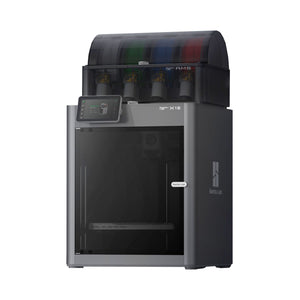
So corporate sent the design file and suggested 3D printing as a temporary solution. We printed the part in a carbon-reinforced nylon, tested it, and it worked flawlessly. The dealership was able to get cars out the door, and they ordered a few more parts to hold them over until the molded version arrived. Problem solved. Revenue preserved.
That’s what agility looks like. Not just faster, but more responsive. More flexible. More in control.
This isn’t about replacing your entire process with 3D printing. It’s about having options. It’s about being able to respond to challenges without waiting on international shipping, expensive tooling, or extended lead times.
We help teams build that kind of resilience into their operations. Some use additive for stopgaps. Others use it for full production. The point is, they’re not stuck. When the market moves, they can move with it.
If your current setup makes it hard to respond to change, it might be time to rethink it. Agility isn’t something you can bolt on after the fact. It needs to be part of how you operate.
This is part of our ongoing series on reshoring, supply chain challenges, and the role of additive manufacturing in modern operations. If you haven’t seen the earlier posts, check out the ones on hidden costs, the additive mindset, and how 3D scanning helps when your data is missing. And as always, if you want to talk about what this could look like for your business, we’re here.